

Keerthana Ravi
- Bangalore, Karnataka, India
- keerthanavignesh2003@gmail.com
- +91 73976-92595
Hardworking college student seeking employment. Bringing forth a motivated attitude and a variety of powerful skills. Adapt to various social media platforms and office technology programs. Committed to utilizing my skills to further the mission of the company.
Experience
Cyber security Intern
As a Cybersecurity Intern, I conducted comprehensive research on cybersecurity frameworks, standards, and industry best practices. I analyzed case studies on Advanced Persistent Threats (APTs) and OSI model attacks, deepening my knowledge of sophisticated cyber threats. I gained practical experience in vulnerability scanning and penetration testing by working with Metasploitable 2 using Nmap and Nessus. Additionally, I developed a strong grasp of common web vulnerabilities and actively applied this knowledge to identify and mitigate security risks in web applications.
Projects
machine learning approach for early detection of diabetic retinopathy
- python
- r
- matlab
- tensorflow
- pytorch
- mongodb
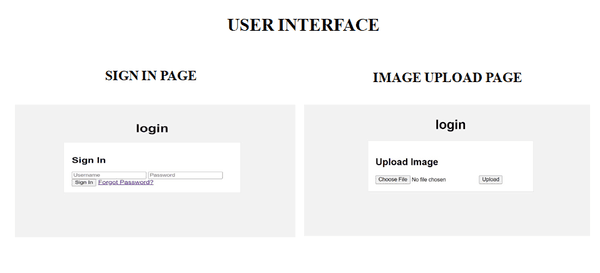
- Developed and implemented an advanced computer-aided system for early Diabetic Retinopathy (DR) detection using Convolutional Neural Networks(CNN) resulting in highly accurate classification. Established an end-to-end pipeline for precise and efficient retinal image processing, enabling timely intervention to prevent vision loss. Collaborated with a diverse team to enhance privacy, scalability, and interpretability of the machine learning model, aligning with patient needs. Automated detection reduced the burden on ophthalmologists and ensured immediate diagnosis. The project's core aim was to minimize DR's impact on vision and be scalable, and the model was continuously fine-tuned to adapt to evolving healthcare data and patient requirements.
Pioneered the development and implementation of a cutting-edge computer-aided system utilizing Convolutional Neural Networks (CNN) for the early detection of Diabetic Retinopathy (DR) from retinal fundus images, consistently achieving high-accuracy classification. Established an end-to-end image processing pipeline, optimizing retinal screening for timely intervention, thereby preventing irreversible vision loss. Collaborated with a diverse team to enhance the machine learning model for privacy, scalability, and interpretability, effectively aligning with the unique needs of diabetic patients. This transformative approach substantially reduced the workload on ophthalmologists and enabled immediate diagnosis, contributing to our mission to mitigate the impact of DR on vision, ultimately enhancing the quality of life for individuals with diabetes. Notably, our scalable system, coupled with continuous model refinement to adapt to evolving healthcare data, further solidified our commitment to excellence.